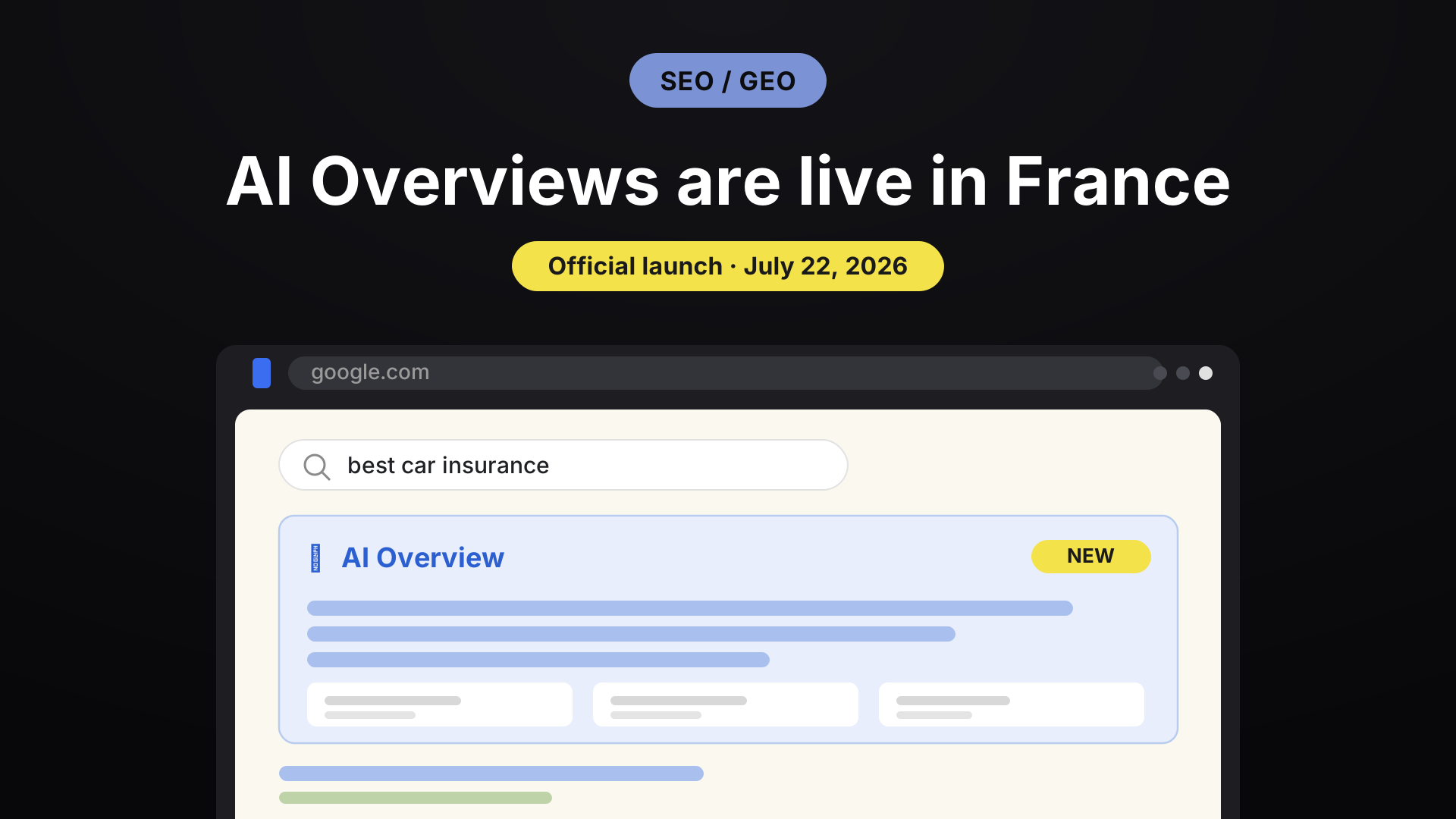
Google launched AI Overviews and AI Mode in France on July 22, 2026, on both mobile and desktop. AI-generated responses now appear above the blue links on google.fr, just as they have in over 200 other countries. France was one of the last major markets to gain access to Google's generative search, and that exception has now come to an end.
At datashake, we have been tracking this shift for two years in markets where it was already live, conducting over 100 exposure diagnostics for our clients. Here is what global data suggests for your visibility, along with an action plan to help you navigate the first few weeks of this new landscape proactively rather than reactively.
What just changed on the search results page
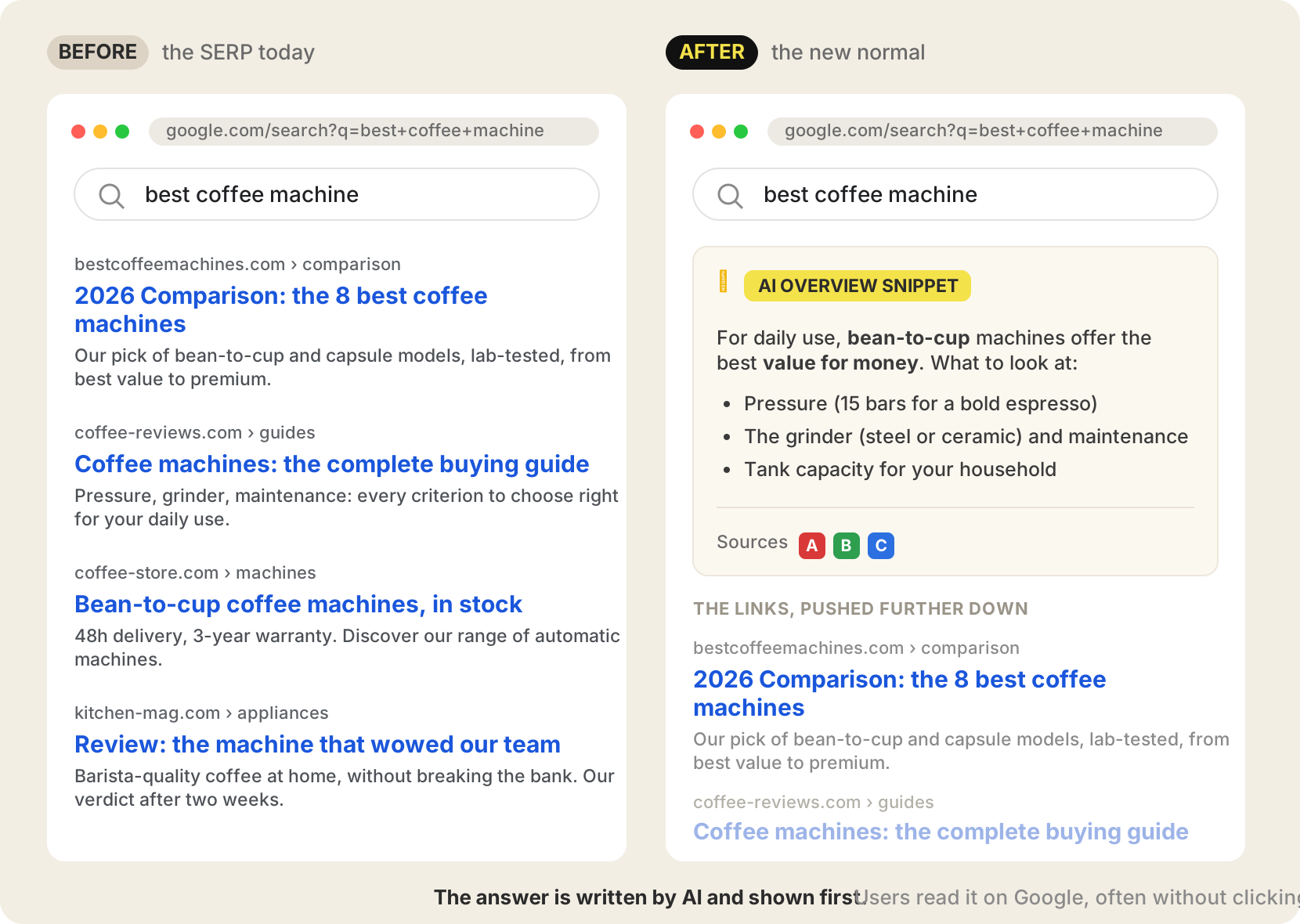
The AI Overview snippet is a response written by Google's AI, displayed at the very top of the results, above organic links. Users read the answer directly on the page, with source links provided for further exploration.
AI Mode goes further: it offers a full conversational experience, where, according to Google, a search session is on average three times longer than a traditional search.
The verdict from markets where this is already live can be summed up in three figures:
- -59% of clicks on the first organic position when a snippet is displayed (Sistrix, based on over 100 million keywords analyzed)
- 69% of searches already end without a single click in the United States (Similarweb, 2025)
- +35% organic clicks for brands cited in the response, and a monthly increase of over 4 percentage points in paid CTR for cited advertisers (Seer Interactive, 2026 study)
The key takeaway: visibility isn't disappearing; it's changing hands. SEO optimizes for clicks, while GEO optimizes for citations.
Every query will fall into one of these three scenarios
- Ranked and cited. The best position under the new regime: your page remains visible in the links and your brand appears in the generated response. This is where the gains are concentrated.
- Ranked, not cited. The erosion position: the rank is there, but the click goes to the summary built from your competitors' sources. This is where the loss is concentrated.
- Outside the snippet. Brand, transactional, local: classic SEO keeps its rules and its profitability. These segments fund the transition.
The entire strategy stems from this mapping: which segments retain the click, and which ones replace it with a citation.
The impact depends on your business model
- Lead gen / B2B: the high-risk model. A 47% drop in organic leads observed over one year in served markets, and 85% of B2B buyers arrive with their list of providers already made (Bain). Priority: embodied expertise and comparative queries, where AI is already recommending providers.
- Media and content: exposed. Guides and evergreen articles are the content types most synthesized by AI. With the launch, Google is introducing new controls in Search Console to manage your site's presence in AI experiences: a trade-off to document, not to suffer.
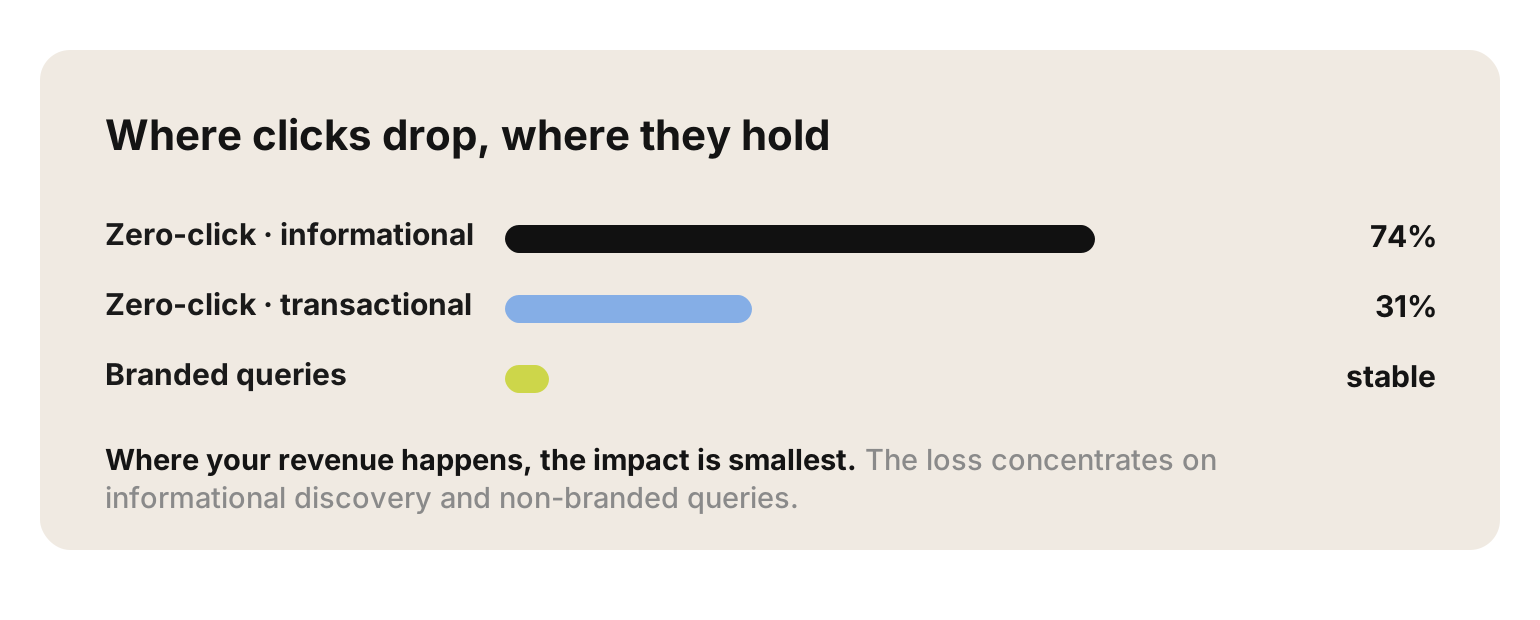
- E-commerce: moderate impact. Guides and comparison articles are dropping (-15% to -30%), but transactional traffic is holding up (only 31% zero-click) and brand queries remain stable. The focus: product data and feeds, which have become visibility assets.
- Local: largely preserved. Local packs are being maintained, and Google Business Profiles are being integrated into ChatGPT and Search Generative Experience alike, providing full listings and recent reviews everywhere.
Three things to do this week
The launch changes the schedule more than the plan. Three actions cannot wait:
- Lock in your baseline. Annotate July 22nd in Search Console, GA4, and your dashboards, then export the last 12 months of rankings, CTR, and conversions by query segment. This is your before-and-after benchmark: in six weeks, this data will no longer exist in a clean state.
- Assess your actual exposure. No more modeling needed: your queries are triggering AI Overviews in France today, or they aren't. Identify which business queries display an Overview and who is cited—you or your competitors.
- Evaluate the new Search Console controls. Remaining visible in AI experiences is the default choice, and the right one for most models. However, the decision is worth weighing and documenting, especially for media and proprietary content.
The long-term action plan: three levers, in this order
1. Your ranking first
You can't manage what you haven't measured. Map your top business queries: which ones trigger an Overview, where clicks survive, where citations replace them, and how much revenue is at stake, segment by segment. This is your exposure audit: the first deliverable, before any spending.
2. GEO visibility: being cited, not just ranked
An AI-readable site: bot accessibility (robots.txt, firewalls), content readable without JavaScript, schema.org structured data, and freshness. Out of nine major French sites we tested, six are blocking AI crawlers without realizing it.
And content designed to be cited: answers at the top of the page, standalone sections, FAQs, and tables—the formats that AIs slice up and repurpose.
3. Dominate the SERP
You will naturally be less visible in traditional SEO for informational queries: you need to be present everywhere else.
Images, long and short-form videos, Shopping, local, Reddit, YouTube. YouTube mentions are already the signal most strongly correlated with visibility in AI answers (0.74 correlation, Ahrefs).
The goal : to be THE go-to source for every type of query, both in links and in generated answers.
And what about paid search?
Ad placements in AI experiences are served by existing campaigns in markets where they are available: Performance Max leads the way, with Shopping and broad match + AI Max being eligible, while exact and phrase match are penalized on new inventory.
Google has indicated that no ad integrations will appear in the initial French rollout: the American experience suggests this period is temporary. Eligibility is built now: account structure, feeds, assets.
No need to panic
This shift is measured, predictable, and manageable. The gaps will widen less between sectors than between levels of preparation: citations can be earned, exposure can be quantified, and measurement can be set up right now.
The losers of this launch won't be the least equipped; they will be those who didn't measure.
For accounts using our GEO framework, we see an average 70% presence on strategic prompts, a threefold increase in AI-referred traffic over two quarters, and visitors from AI responses that are 4.4 times more valuable than standard organic traffic.
Where to start: the live audit
A 30-minute video call with one of our experts, using your actual data (Search Console, crawl). No preparation required on your end and no obligation: get a live assessment of your exposure, what’s at risk, what’s holding steady, what opportunities are up for grabs, and the three priorities for your model.
Overviews are already appearing for your queries. The first few weeks establish your baseline: the best time to measure is now.
{{audit-primary="/cta"}}
FAQ
What is an AI Overview?
A response generated by Google's AI that appears above organic results, including links to its sources. It launched in France on July 22, 2026, alongside AI Mode, Google's conversational search experience.
Do AI Overviews affect all searches?
No. The scope initially covers a portion of informational queries and expands in waves, just as it has in other markets. Currently, branded, transactional, and local queries remain the most protected.
Can you opt out of appearing in AI Overviews?
Google is launching new Search Console controls to manage your site's presence in AI-powered experiences. Staying visible is the default setting; any decision to opt out should be documented based on your specific business model.
How can I measure the impact on my site?
By establishing a baseline now (rankings, CTR, and conversions by segment, annotated as of July 22) and then tracking performance changes segment by segment. This is the core focus of the datashake exposure audit.
Sources: Google France (official announcement, July 22, 2026), Sistrix, Similarweb, Seer Interactive (2026 study), Bain, Ahrefs, Adobe, and internal datashake data (+100 exposure diagnostics, 2024-2026).
.png)
.png)
.png)